Sunday, January 17, 2010

Donnie Darko locations

The Darko House
4225 Country Club Drive, Long Beach, CA


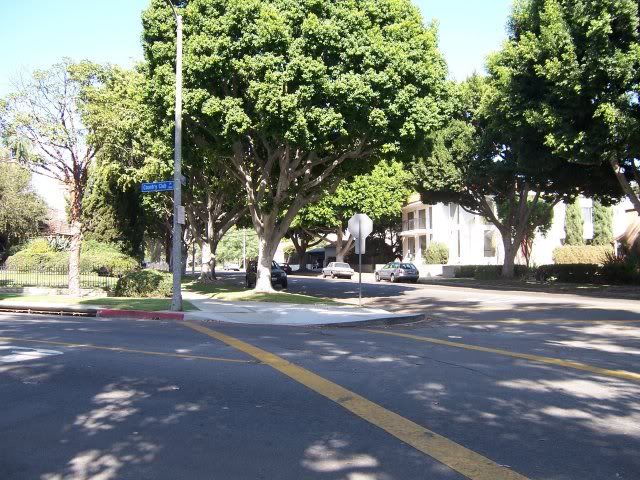
Donnie's Bus Stop -
Corner of N Country Club Drive and W San Antonio Drive


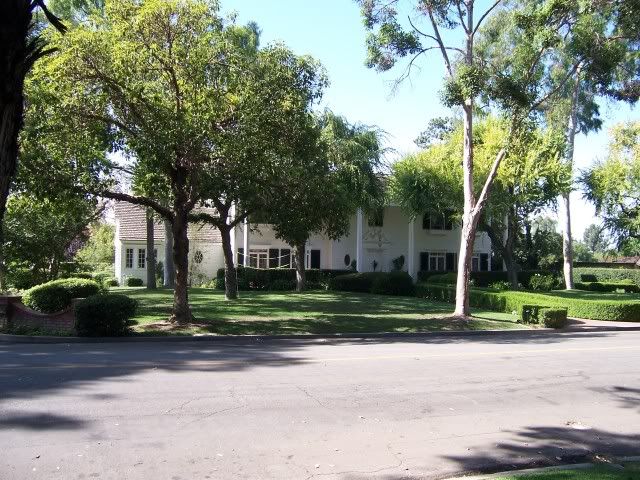
Jim Cunningham's House
4252 Country Club Drive, Long Beach, CA


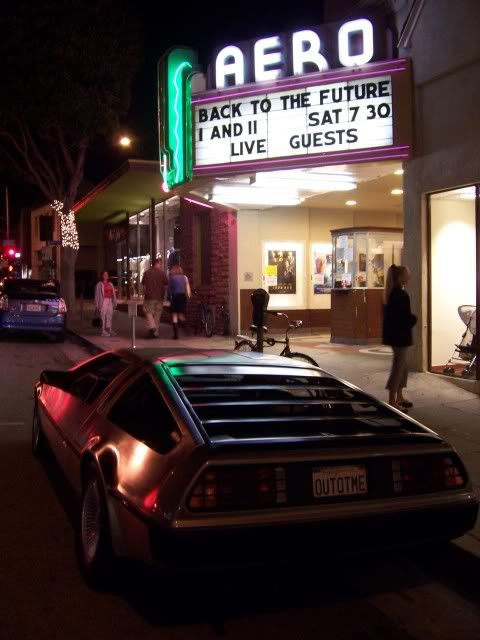
The Aero Theater
1328 Montana Avenue, Santa Monica, CA


Middlesex High School
Loyola High School - 1901 Venice Blvd, Los Angeles, CA


Holiday Inn
150 E Angeleno Ave, Burbank, CA

The hotel was featured in the Director's Cut (the Darko family stayed here after the jet engine fell in the house). The angle of the Hotel seen in the movie can be seen standing at the corner of S 1st St and E Verdugo Ave (looking north).

Thursday, January 14, 2010

Red Dawn (1984)

"They can have my gun when they pry it from my cold, dead fingers." - Old John Milius proverb

Starring: Patrick Swayze, Charlie Sheen, Lea Thompson, Jennifer Grey, C. Thomas Howell
Written by: John Milius, Kevin Reynolds
Directed by: John Milius

And over on the left, we have a quaint little war movie from 1984, called Red Dawn. For those of you who missed out on the 1980s, Red Dawn is a veritable time capsule. Just by popping this bad boy into your video machine and sipping some nice cognac, you can learn a remarkable amount of information about the Reagan years. To put it simply, people were street rat crazy in those days. The threat of the Ruskies was hyper-real and ever present, permeating our subconscious with thoughts of hammers, sickles and borscht on Christmas morning.

Red Dawn tells the story of a heroic group of teenagers who band together, and raise hell after invading Russians occupy a large part of the United States. Dubbing themselves The Wolverines (after the local high school football team), they take up any arms they can find and begin an armed resistance against the Soviet occupation. That's as simple as it gets - and really, what more do you need? What we have here is the perfect 1980s WWIII nightmare scenario. The Red Menace finally takes the Cold War to a whole new level, and storms the American Midwest. And only one group of warriors can stop them: a bunch of kids. Just imagine The Breakfast Club in a salad bowl with Platoon, and even a dash of Star Wars, for good measure. The Brat Pack vs. the Evil Empire. Now look at the 80s cinema landscape and tell me that's not the greatest foundation for a movie you've ever heard. I didn't think so.

Before we go any further, we must address the movie's politics. Back in '84, Red Dawn was panned as a Conservative wet dream; a love letter to Reagan and the 2nd Amendment. When the Soviets rain from the sky and take our country right out from under us, what do we do? We arm the youth of America and fight back! Any liberal in his/her right mind would obviously take issue with this. But that's where the politics of Red Dawn actually work in the movie's favor. How else would you handle the nightmare invasion scenario? This is reflective of the Cold War paranoia of the mid-80s. Liberals scoffed when Red Dawn was released, but the message to young America was clear: This could happen! And who better to direct such a cautionary tale than "zen-fascist" John Milius, the primary inspiration for The Big Lebowski's Walter Sobchak?

But therein lies the problem. Red Dawn works best as a message. As a movie, not so much. Everything about Red Dawn is the setup; there's no payoff. Looking at this as a war movie, the most gripping action clearly takes place in the opening twenty minutes. We are treated to the idyllic serenity of Calumet, Colorado on a crisp September morning. High school football is a big draw, the pickups have gun racks; life is simple. "Pure" America, as it were. This is until Russian paratroopers rain down from the sky and open fire on the local high school. Milius uses reactionary images of bloody students hanging out of classroom windows and a history teacher riddled with gunfire to snap the audience to attention. But it works, because the godless Commies are ruining our serenity - and we're pissed, dammit!

In the mass panic and confusion during the initial attack, a small group of high school students manage to escape into the mountains. Using whatever weapons they can find (hunting rifles, mostly), they form an armed resistance against the occupation, dubbing themselves The Wolverines (after the high school football team). They spend most of their time living off of game in the wilderness and training in the art of guerrilla warfare (apparently it's up to the viewer to figure out where they learned said tactics). This is where the movie falls off a cliff. The problem here, is that the remaining action scenes are restricted to The Wolverines getting into small skirmishes with the Ruskies, and tagging their territories, gang-style (attack, run, repeat). Intermixed between these skirmishes are scenes of the teenagers dealing with feelings of isolation, self-reliance, and the ravages of killing other human beings. This is most apparent in the dehumanization of Robert (C. Thomas Howell). Every kill adds another notch to the butt of his AK-47, and the death of his humanity. Now we have a movie that's at once glorifying violence, and condemning the act of guerrilla warfare.

Even if you were to praise this film as the ultimate in Conservative movies, in the end you have a film that's at odds with itself. There's a coming-of-age teen story buried somewhere deep within the conflicted war movie, but unfortunately it isn't fleshed out, as the actors have no chemistry among one another. One could argue that the wilderness isolation and domestic defense force these kids to grow up, but there isn't enough character to make us care about any of these people.

With such a delightfully absurd premise, I was expecting at least some 80s cheese. But Red Dawn doesn't even constitute a "bad" movie (a la The Apple), as it just tends to bore the audience (especially at an overly long 144 minutes). You look at this movie, and you hope for something so bad, it's good. Hey, Patrick Swayze gifted us with the sheer awesomeness that is Road House - there's gotta be something here, right? Unfortunately, Red Dawn just isn't bad enough. The only person who had anything to work with here was Swayze. As the leader of The Wolverines (and the glue that holds them together), he's the most captivating to watch, as he slowly loses his focus and determination. Alas, Red Dawn is a movie that's all about its ideology, with nothing else beneath the surface.


3/10

Wednesday, January 13, 2010

Star Trek: The Motion Picture (1979)

Starring: William Shatner, Leonard Nimoy, DeForest Kelley, Stephen Collins
Written by: Alan Dean Foster (story), Harold Livingston (screenplay)
Directed by: Robert Wise

It's been three years since the five-year mission of the Original Series. The USS Enterprise has been in drydock, undergoing an extensive refit under the new command of Captain Willard Decker. The re-designed starship is called back into service when Starfleet gets wind of a massive energy cloud on its way to Earth. Assuming command of the Enterprise is her storied captain, Admiral James T. Kirk. After rounding up the original members of his crew, Kirk and co. head off to stop the looming alien threat before it can reach Earth.

The 1979 release of Star Trek: The Motion Picture marks ten years since we've seen the original crew in action. And a lot has changed, since then. Capt. Kirk has been languishing behind a desk after his promotion to Admiral; Spock has been on Vulcan, in preparation for the Kolinahr ritual (the purging of all remaining emotion); and the Enterprise, herself, has been undergoing massive refits - the result of which is a starship of such size and grandeur, that it's rightful place is on the silver screen.

Most of the cast and crew return to their posts onboard the Enterprise - with the exception of Kirk, who's been chomping at the bit to get back out there with his ship. We have a captain who is irritated with where his career has landed him. He uses any and all clout to reclaim command of his beloved vessel - and there's tension on the bridge, with Kirk having usurped Decker's rightful place in the Captain's chair. The term "muscled his way in" is taken quite literally here, as Kirk has never looked more fit on the bridge of the Enterprise than he does in The Motion Picture (the result of Shatner's heavy fitness regimen and starvation diet before cameras rolled).

One of the movie's signature scenes is the re-introduction of the Enterprise. Wise makes full use of the cinematic wide screen, as every angle of the ship is on display. We've never seen the ship this big before, and we share in Kirk's loving admiration as we are reacquainted with the massive starship. And it's the perfect scene to catapult the fans of Star Trek into a big screen adventure - the small screen could never do the ship justice. The sequence (and entire movie, for that matter) are bolstered ten-fold by Jerry Goldsmith's incredible score - one of the composer's very best.

While the financial success of The Motion Picture can be credited with ensuring the future of the Trek film series, its critical success is certainly a mixed bag. The Motion Picture is a great science fiction story, but it doesn't capture the magic of the Original Series. It's sort of like having a "thinking man's sci-fi" film with the Enterprise crew members along for the trip. Step back and look at the Original Series, and the original crew movies in the film series, The Motion Picture feels like an awkward stepping stone between the two - not only in tone, but in costume and set design, as well. Wise was able to go back and re-edit the movie for a 2001 DVD release (the version being reviewed), and it helped lessen the soporific feeling of the original '79 release. So pacing wasn't an issue for me. It just didn't feel like Star Trek.

5.5/10

Tuesday, January 12, 2010

To Live and Die in L.A. (1985)

Starring: William Petersen, Willem Dafoe, John Pankow
Written by: Gerald Petievich (novel, screenplay), William Friedkin (screenplay)
Directed by: William Friedkin

To Live and Die in L.A.
, William Friedkin's stylish 80s crime thriller, is notorious for one of the greatest car chases ever captured on film. Which is completely deserved, as the chase scene featured in the movie is a true nail-biter. But unlike Bullitt (that other "great car chase" movie), there's a lot more going on story-wise in the film.

From the opening credits with the smog-choked skies of the city and the industrial wastelands of L.A., it's clear we won't be spending any time in the scenic landscapes and upscale neighborhoods Hollywood usually has us visit. The L.A. that Friedkin is showing us is the seedy underbelly, the trainyards, dilapidated architecture and gritty urban cityscape. The skies run blood red in the opening shots, and the haze makes the vistas almost alien in appearance. A different setting indeed, when "Miami Vice" ruled the airwaves.

When his partner is found dead while tracking down counterfeiter extraordinaire Rick Masters (Dafoe), hotshot Secret Service agent Richard Chance vows to bring him down at any cost. Together with his new straight-laced (and spineless) partner, John Vukovich (Pankow), Chance hits the mean streets of Los Angeles with a vengeance, using everything from blackmail to robbery just to get close to his prey.

Chance is an adrenaline junkie - he's quick to jump headfirst into a situation and damn the consequences. Masters has been untouchable for years and loves to flaunt this in his criminal enterprise. At times, the lines of distinction between these two men bleeds, and one wonders if there's even a good guy.

Counterfeiting becomes a major theme in the film, beyond just the act of printing money. The entire movie is counterfeit - from the relationships, to the motives, to the world in which these characters live. Everyone's being played by somebody else, you don't know who to trust, and it leaves the entire movie shaded in ambiguity that throws you off the scent. Together with the hard-hitting action scenes (and an ending no one saw coming), you're left reeling from the roller coaster chase of it all.

8/10

Lethal Weapon 2 (1989)

Starring: Mel Gibson, Danny Glover, Joe Pesci
Written by: Shane Black (story, characters), Warren Murphy (story), Jeffrey Boam (screenplay)
Directed by: Richard Donner

Two things come to mind when people think of the Summer of '89: sequels and the uber-blockbuster media event known as Batman. And that summer was a bitter pill to swallow, as most of the sequels released were disappointments (to say the least). Indiana Jones and the Last Crusade was one of two contenders left standing after the dust settled. The other was Lethal Weapon 2.

Returning to the big screen is the Odd Couple of buddy movies: Roger Murtaugh and Martin Riggs. This time around they're going head to head with a group of South African drug smugglers, led by Arjen Rudd, the minister of affairs for the South African Consulate. The only snag is that Rudd's group is protected under diplomatic immunity; the police can't touch him. Riggs and Murtaugh are reassigned to the protection of Leo Getz (Pesci), a federal witness who laundered half a billion dollars for Rudd's outfit. Riggs and Murtaugh take the fight to Rudd's doorstep - picketing outside the consulate ("END APARTHEID NOW!") and harassing Rudd in his office. When the drug smugglers wage war on the police, Riggs and Murtaugh take the law into their own hands.

There's a distinct tonal shift toward comedy in the Lethal Weapon series starting with Lethal Weapon 2. The score heard over the opening title screen is a Looney Tunes-esque theme, setting the tone for a more comical entry in the series. What follows is a five minute car chase that emphasizes explosions, frenetic pacing, and lighthearted bickering between the two leads.

For most of the movie's running time (up until the third act), Riggs is still crazy - but this time it stems less from psychosis, and more from a comic sense of mischief. He's a lot more well-adjusted in this film. He spends a lot of time at the Murtaugh residence (Mrs. Murtaugh often does his laundry), and lives for getting into trouble ... usually at the expense of Murtaugh's nerves.

Adding to the film's comic tone is the introduction of Getz. He's a blabbermouth, slimy and eager to please. He's the star witness to the state, but ends up being pushed around by two cops that want nothing to do with him. He's a great foil for Riggs and Murtaugh - instead of focusing on the infighting between the pair, the movie has fun with Getz's mistreatment by the two detectives. His drive-thru rant is one of the movie's more memorable moments (unfortunately to be rehashed in Lethal Weapon 4).

It's when we reach the third act that we're reminded of the ever-present darkness that lurked in the first film; that Lethal Weapon brand of violence. There's a sadism that effects most of the characters involved - it's almost a footnote to remind us this isn't solely a comedy.

But the movie stands as a rare example of a sequel that doesn't glide on repeating the magic of the first film. There's a progression in the relationship between Riggs and Murtaugh; these guys are growing closer together with each step. It's no longer an issue of just working together - there's a great deal of trust involved. And that's the key to this movie's success: once the credits start rolling, we miss these characters already.

7/10


Author's note:
(SPOILER)


This movie would've been an 8/10 for me, except for one irritating story point: Vorstedt's admission to killing Riggs' wife.

It is astonishingly lazy screenwriting to retcon Vorstedt as Victoria's killer. I understand why the writers did this - they needed a reason to get the bloodlust back into Riggs' eyes; get him pissed off again. But it comes off as amazingly transparent, when it's obvious that Vorstedt wasn't even a glimmer in a writer's eye back in '86 when Lethal Weapon was written. Here's an idea ... if you allow Riggs to move on with his life and fall in love with Rika (as he did) then kill off Rika! That should be enough to get Riggs thirsty for vengeance. Reawaken the psychopath, so to speak. Instead, Riggs goes ballistic after hearing the news, gets tossed into the water, and then finds Rika's body at the bottom of the ocean.

It's lazy writing like this that blows a pretty big hole in the story. And to be honest, it was irritating enough when I watched the movie that I considered a 6/10 because of it. But at some point, it becomes an inability to see the forest for the trees. There's rating, and then there's being overly picky.

Lethal Weapon (1987)

"Have you ever met anybody you didn't kill?"

"Well, I haven't killed you yet."

Starring: Mel Gibson, Danny Glover, Gary Busey
Written by: Shane Black
Directed by: Richard Donner

If there's one good movie to emerge from the 80s buddy film genre, it's Lethal Weapon - a movie chock full of action, suspense and most importantly, chemistry between the two leads.

In the days leading up to his retirement from the force, LAPD sergeant Roger Murtaugh has been assigned the case of Amanda Hunsacker, a young woman found dead after taking a nosedive from her high-rise apartment. Things get personal for Murtaugh after he discovers Amanda was the daughter of Michael Hunsacker, an old friend from his days in the army. Further complicating matters is Murtaugh's new partner, sergeant Martin Riggs, a burnt-0ut cop who's registered as a Lethal Weapon from his combat experience in Vietnam. Riggs has been on the edge since his wife's death three years prior. The two reluctant partners are forced to work together to solve Amanda's murder, which leads to the discovery of Shadow Company, a drug-smuggling cartel importing heroin into Los Angeles. Murtaugh vows to bring down the drug cartel, if only he can survive his partner.

There's no shortage of gunplay, fistfights, explosions and high-speed chases in this gripping action movie from the mid-80s, and Donner clearly wasn't shy about the violence; much of it is the in-your-face variety. But it's the relationship and the interplay between the two leads that elevates this film over other genre fare, and adds loads of character to the story. Riggs and Murtaugh couldn't be a more disparate duo. One enjoys his time on the job neat and by the book - the other lives on the edge, an adrenaline addict and nearly too dangerous for his own good. Their settings are at odds with one another.

We first see Murtaugh on the morning of his 50th birthday. He's surrounded by a loving family, lives in the big house with a boat in the driveway, and enjoys the life of the domesticated family man in his autumn years. As we're introduced to Murtaugh, all he has to worry about is the gray hair, the pains of raising a teenage daughter with her budding sexuality, and finishing out the last few days of his fairly tame routine on the job. Riggs on the other hand, lives by himself in a trailer on the beach; no one around but a dog to keep him company. He lives the life of a lonely man, his surroundings are in disarray, and there's no solace in his existence. He wakes up every day, going through the motions. We soon find out that it's the job that keeps him going. Not only is Riggs at odds with Murtaugh, he's at odds with himself. He very nearly actually kills himself with his pistol, but can't do it with his wife's wedding picture staring him in the face. He desperately wants to end it, but it's her that's keeping him alive, plugging along, day after day.

There's a definite edge to this movie, most of which stems from Riggs, himself. His wife's death has reduced him to little more than a badge-wearing killing machine. His aim is lethal, and his hands quick to snap one's neck. He's a loner, as no one in the department wants anything to do with him. More often than not, he's got the look of a manic wild man, thanks to Gibson's crazy eyes and long hair (somewhat reminiscent of the vagrant appearance of John Rambo in First Blood).

Much of the movie's humor is derived from the bickering between Murtaugh and Riggs. When Riggs isn't making fun of Mrs. Murtaugh's cooking, he's poking fun at Murtaugh's overly professional approach to the job. Riggs derives pleasure from the chase, Murtaugh's happy with staying alive. It's almost like a sadistic action movie version of Bert and Ernie. And the movie could easily veer off into a married couple on the job (as the sequels will, in time), but the duo's infighting is offset by the violence and the very dangerous nature of the film's bad guys. In the end, these two detectives are only trying to survive to see tomorrow.

8.5/10
Monday, January 11, 2010

Prince of Darkness (1987)

Part VI in a John Carpenter film quest.

Starring: Donald Pleasence, Jameson Parker, Victor Wong, Dennis Dun
Written by: Martin Quatermass
Directed by: John Carpenter

After the death of a priest in a Los Angeles church leads to the discovery of a cylinder in the church basement (containing a swirling green liquid), a group of physics graduate students from a local university is asked to investigate. After translating a manuscript found near the cylinder, it is discovered that the liquid contains the essence of the Anti-Christ. The manuscript portends that when the son awakens, he will then awaken the father (the Anti-God), trapped in another dimension. The remains of the Anti-Christ have been stirring in the preceding days, and the students' research finally awakens the demon. He assumes control of the students (one by one) from the inside of the church, while controlling the group of homeless people living outside. As their numbers decrease, the research team must stop the Anti-Christ and sever the portal before the devil is released.


Critics weren't kind to Prince of Darkness upon its release in 1987 (and for that matter, neither were audiences). And it left me feeling odd as the credits rolled. The movie is downright creepy, and it wasn't lacking in the scary department, either (to be fair, I don't have the stomach that horror fans do). And the movie certainly has a great setup. But it's the payoff that's disappointing, for me. There were some good scares in the second half (along with some unsettling makeup), but these weren't characters I really cared for. There was a romance in the beginning of the film that was never really fleshed out, reducing any impact that would have on the movie's climax. And the only character that had any personality was Walter (Dennis Dun), and he was the jerk of the group (any humor was derived from that particular role).

The zombie-movie elements of the possessed humans grew a little outlandish, as limbs were chopped, and heads hacked away (the zombie-movie angle was used to greater effect in
Assault on Precinct 13) , which took away from the psychological thriller aspect; one of the movie's strengths. The overly technical dialog (which many a critic had a beef with), I didn't mind, at all - especially when you had the intriguing idea of people in the future broadcasting messages back to the present through neural stimulation (dreams). Prince of Darkness faded from theaters and found a cult following in the years ahead. I have a feeling my attitude toward this film will change with another viewing.

6.0/10